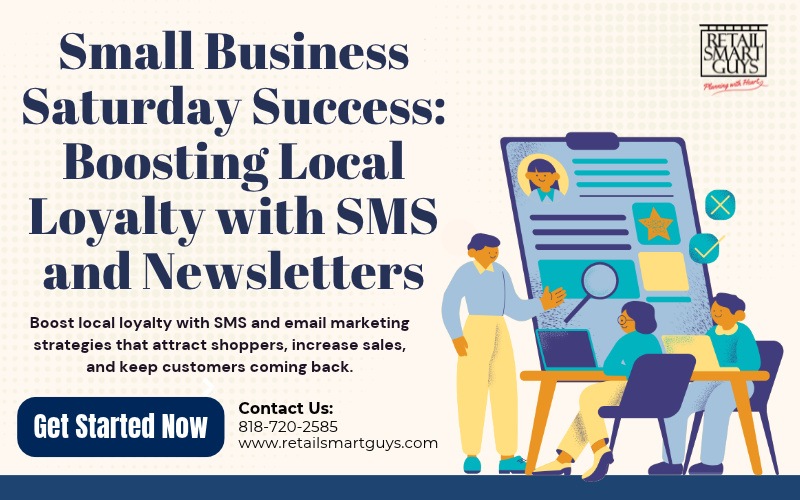
Small Business Saturday is more than another date on the holiday shopping calendar.
It’s an opportunity for independent retailers to remind customers why shopping local matters—and give them a reason to keep coming back long after the day is over.
But here’s the challenge: getting customers through your door is only the first step.
The real opportunity is turning that visit into a lasting relationship.
That’s where two often-underused marketing tools can make a big difference: SMS messaging and email newsletters.
When used together, they help retailers stay connected, share timely offers, promote new merchandise, and keep their businesses top of mind during the busiest shopping season of the year.
1. Give Customers a Reason to Shop Local
Customers have plenty of places to shop during the holidays.
Your job is to show them what makes your store different.
Maybe it’s your product knowledge.
Maybe it’s the carefully selected merchandise they won’t find everywhere else.
Maybe it’s the personal service, welcoming atmosphere, or community relationships you’ve built over the years.
Whatever your advantage, make it part of your Small Business Saturday message.
Instead of simply announcing a sale, tell customers what they can experience when they shop with you.
You’re not just selling products. You’re offering a reason to choose your business.
2. Use SMS for Timely, Personal Reminders
Text messaging can be useful when you have something timely and relevant to share.
Think about sending messages to customers who have opted in to receive them:
- A reminder about your Small Business Saturday event
- A preview of a special promotion
- An announcement about new or limited-availability merchandise
- A last-minute reminder about store hours
- A thank-you message after the event
Keep messages short, clear, and helpful.
For example:
“Small Business Saturday is almost here! Join us this weekend to discover holiday favorites, explore new arrivals, and shop local. Stop by [Store Name] on Saturday!”
The goal isn’t to flood customers with messages.
It’s to deliver information they genuinely want to receive.
Always obtain appropriate consent, identify your business, and provide a clear way to opt out.
3. Let Your Newsletter Tell the Bigger Story
SMS is great for quick updates. Email newsletters give you more room to build a relationship.
Use your newsletter to share:
- Your holiday gift guide
- Staff-selected gift ideas
- New product arrivals
- Upcoming in-store events
- Customer favorites
- Shopping tips and helpful recommendations
- A message about why supporting local businesses matters
Don’t make every newsletter a sales pitch.
Give readers something useful or interesting, too.
A helpful gift guide can make holiday shopping easier. A product demonstration can answer questions. A behind-the-scenes story can introduce customers to the people who make your store special.
When your emails are useful, customers have a reason to keep opening them.
4. Connect the Two Channels
Your SMS and email campaigns shouldn’t operate as separate marketing efforts.
Give each channel a clear role.
Use email to introduce your holiday plans, showcase products, and tell your story.
Use SMS for timely reminders and important updates.
For example, you might send an email early in the week featuring your Small Business Saturday gift guide, then send an opted-in text reminder closer to the event.
Afterward, follow up with a thank-you email and share what’s coming next.
This creates a more coordinated customer experience without repeating the same message everywhere.
5. Turn One Shopping Day Into a Holiday Relationship
Small Business Saturday may bring new customers into your store, but what happens after they leave?
Have a plan.
Invite interested shoppers to join your email list or SMS program—with their permission.
Thank customers for visiting.
Share helpful holiday shopping content.
Introduce new arrivals that match their interests.
Remind them about upcoming events.
And make it easy for them to stay connected.
The goal is to build an ongoing relationship, not simply capture a single transaction.
6. Measure What Actually Matters
Marketing results go beyond likes, opens, and clicks.
Review the numbers that help you understand whether your campaigns are contributing to business performance.
Look at:
- Store traffic and sales during the event
- Revenue associated with specific promotions
- Email clicks and conversions
- SMS engagement and resulting purchases
- New customer sign-ups
- Repeat purchases after Small Business Saturday
Use the results to improve your next campaign.
If a particular gift guide generates interest, create more content like it. If a promotion brings in traffic but produces weak sales, review the offer and merchandise selection.
Good marketing creates attention. Great retail planning turns that attention into business results.
Your Best Holiday Marketing Starts With a Plan
Small Business Saturday is a wonderful opportunity, but it shouldn’t be treated as an isolated event.
Your messaging, inventory, promotions, staffing, and cash flow all need to work together.
You don’t want to promote products you can’t replenish or discount merchandise without understanding the impact on your margins.
At Retail Smart Guys, we help independent retailers connect the dots between merchandise planning, inventory, reporting, and business performance.
Technology can make marketing more efficient, but Actual Intelligence helps retailers understand their customers, recognize opportunities, and make decisions that fit their businesses.
Actual Intelligence + Artificial Intelligence = Retail Smart Guys.
This holiday season, don’t just focus on getting customers through the door.
Give them a reason to return.
That’s Planning With Heart.
Better Plans, Better People, Better Pricing
Get a FREE INVENTORY ANALYSIS.
Best,
Dan Jablons
Retail Smart Guys
Cell: 818-720-2585